2026 Topps Series 2 Baseball: Every Variation, Explained
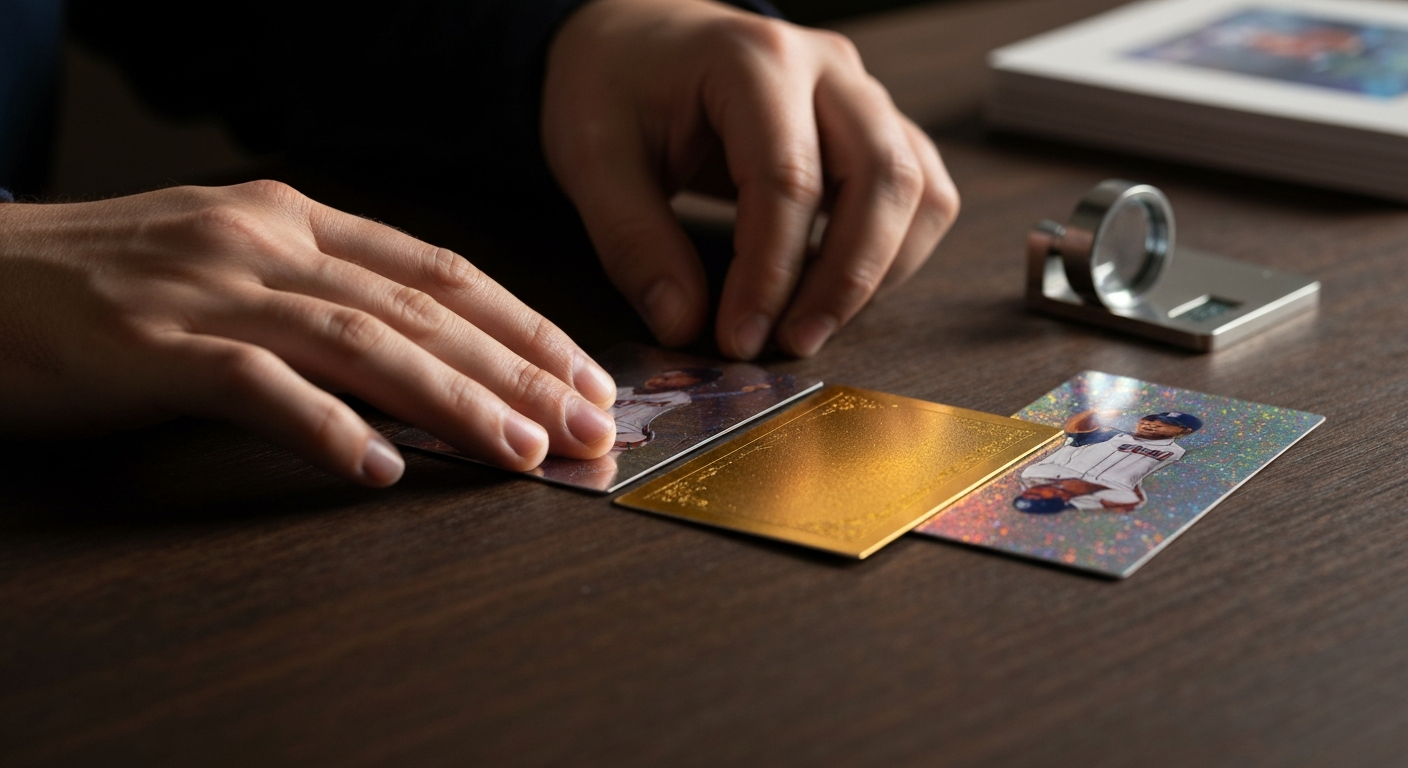
2026 Topps Series 2 Baseball landed in June carrying a diamond-encrusted 75th Anniversary logo on every card — and six named variation types that collectors routinely mix up. A gold foil back means something different from a tactile sparkle insert, and neither is numbered the same way. Here's how to read whatever came out of your pack.
What are the six variation types — and how do I tell them apart?
Each type follows a different logic — and Diamond Dust is an insert set, not a base variation. Snap a photo in CardLoft to log your exact variation; the app matches it straight to the right checklist entry.
- Golden Mirror (unnumbered SSP): Alternate photo, gold foil back. Short-print — NOT serially numbered. ~1:718 hobby packs.
- Through the Years Golden Mirror (5 cards): Jeter (#98), Clemente (#164), Robinson (#312), Henderson (#482), Trout (#US175) — historical-era photos. Odds 1:273,160 hobby, the hardest named pull in the set.
- Golden Mirror Legends Variations (50 cards): Retired legends appear at the same card number as a current base player. Odds 1:28,017 hobby.
- Player Number Variations (25 cards, hobby exclusive): Jersey number in the border, numbered to that jersey number — Ohtani's is /17. ~1:6,773 hobby.
- 1952 Rookie Variations (20 cards): Rookies in the 1952 Topps design; base is unnumbered, autos are /10, /5, 1/1. ~1:17,529 hobby.
- Diamond Dust (INSERT, not a base variation): Tactile sandpaper/sparkle finish; 'Diamond Dust' on the card back is the key tell. Separate set — Ohtani and Judge lead the checklist.
How does the parallel ladder work — and where does my pull rank?
The rainbow runs 16 rungs from unnumbered Rainbow Foil to the FoilFractor /1 at the top. One quirk: the Gold parallel is /2026 — the 75th Anniversary year — not /2025. Add yours to a private CardLoft trade list; only the people you invite can see it.
- FoilFractor /1 (hobby/Jumbo) · Rose Gold Holo /1 (retail only) — the two top peaks
- Printing Plates /1 — Cyan, Magenta, Yellow, Black; four versions per card
- Red /5 · Black /10 · Platinum White /10 · Orange /25 · Gold /50
- Green Rainbow Foil /99 · 75 Years /75 · Black Border /75 · Blue RF /150 · Purple RF /250 · Yellow RF /399
- Gold /2026 · Rainbow Foil (unnumbered) — base of the rainbow
What's a Buyback Redemption — and which vintage cards are in the pool?
Pull a Buyback Redemption insert and Topps sends back the original vintage card with a 75th Anniversary stamp. Nine confirmed targets span 1952 through 2008.
- 1952 Topps Andy Pafko #1
- 1953 Topps Jackie Robinson
- 1954 Topps Hank Aaron RC
- 1955 Topps Roberto Clemente RC
- 1956 Topps Mickey Mantle
- 1957 Topps Hank Aaron
- 1989 Topps Ken Griffey Jr.
- 1993 Topps Derek Jeter RC
- 2008 Topps Clayton Kershaw RC
Which rookies should Series 2 collectors know?
- Munetaka Murakami (White Sox, 1B/DH, #503): Base RC and 1952 Rookie Variation. His Golden Mirror homages Frank Thomas's 1992 Topps pose.
- Trey Yesavage (Blue Jays, pitcher, #620): Has a 1952 Rookie Variation.
- Harry Ford (Nationals, catcher, #659): Also in the 1952 Rookie Variation checklist.
- Jacob Misiorowski (Brewers, pitcher): His RC is card #10 in Series 1 — NOT Series 2.
Frequently asked questions
Is the Golden Mirror serially numbered?
No. Short-print with an alternate photo and gold foil back — no serial number on the card. Numbered parallels are a completely separate layer.
What's the difference between Diamond Dust and Golden Mirror?
Golden Mirror is a short-print base variation; Diamond Dust is a separate insert set with a tactile sparkle finish and 'Diamond Dust' on the back.
My 1952 Rookie Variation isn't numbered — is that right?
Perfectly normal. The base 1952 Rookie Variation is unnumbered by design; only the autograph versions carry serial numbers (/10, /5, 1/1).
Why is the Gold parallel numbered /2026?
Topps set it at /2026 to mark the 75th Anniversary year (1951 + 75 = 2026), not the release year.
What do I receive from a Buyback Redemption?
The original vintage card with a 75th Anniversary stamp — one of nine confirmed targets spanning 1952 Topps through 2008 Topps.